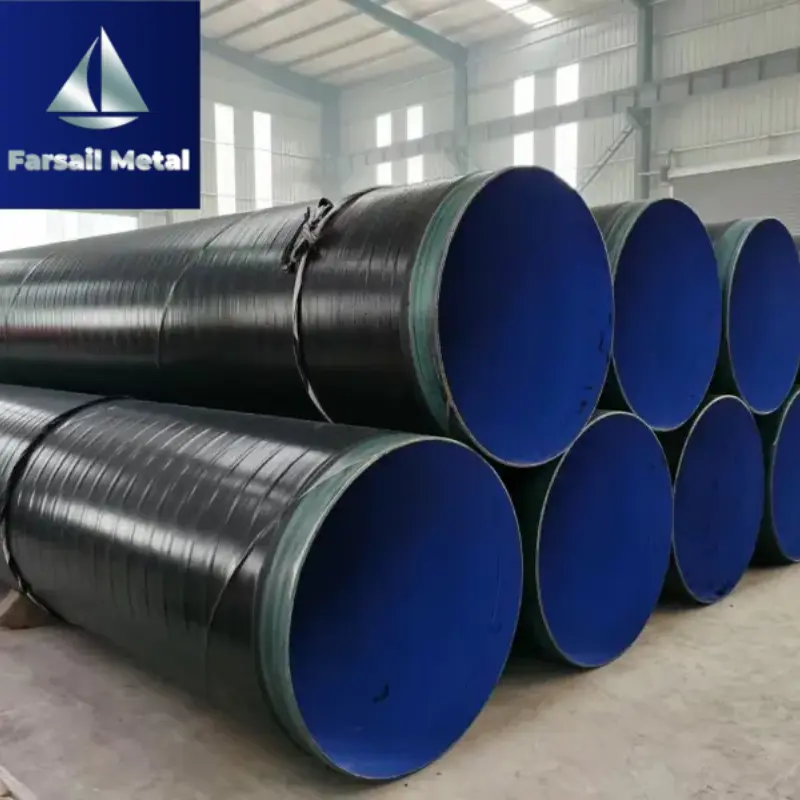
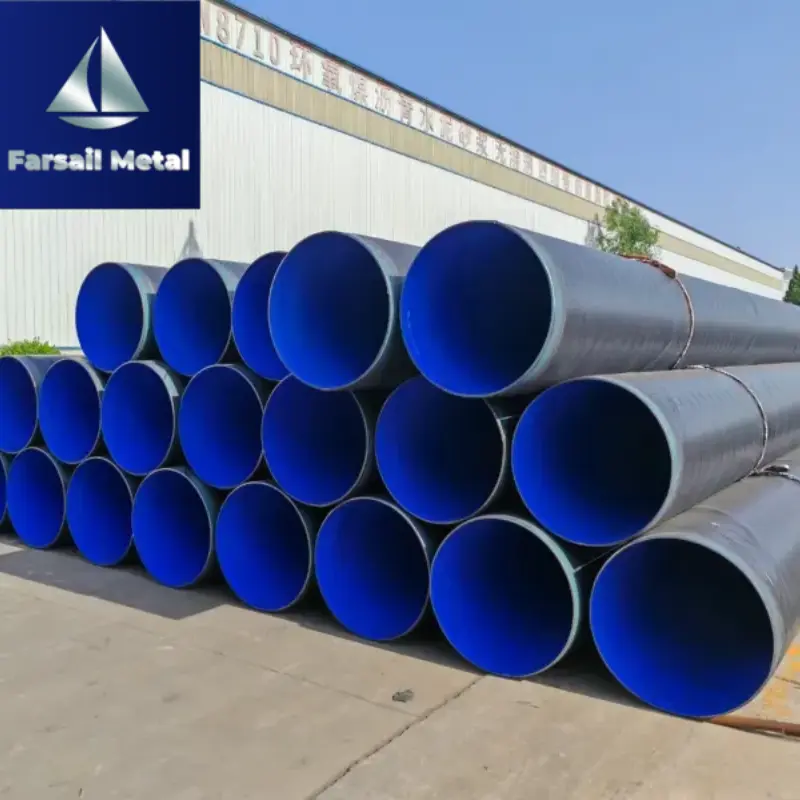
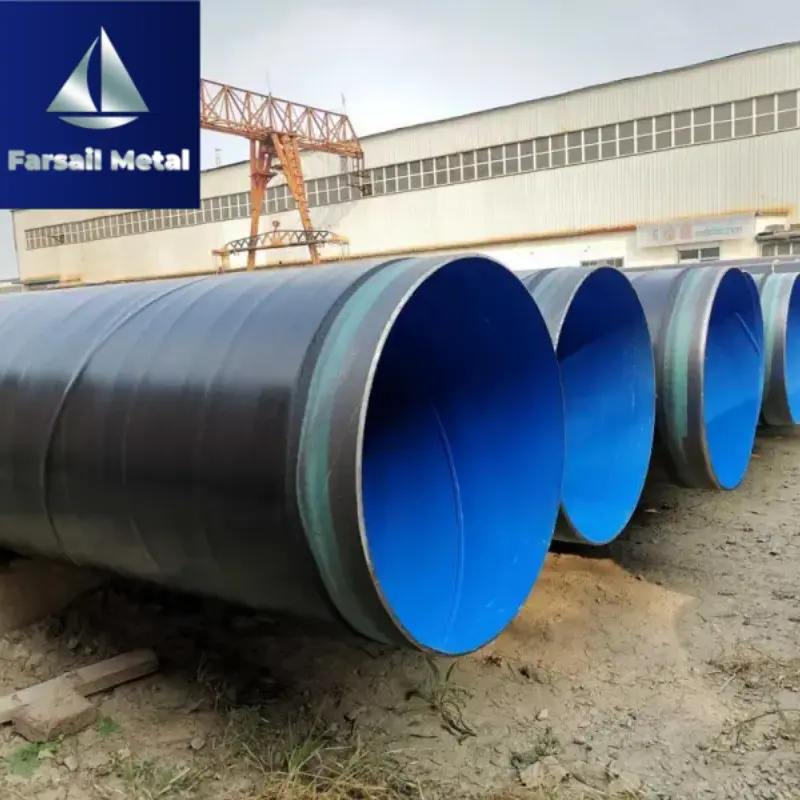
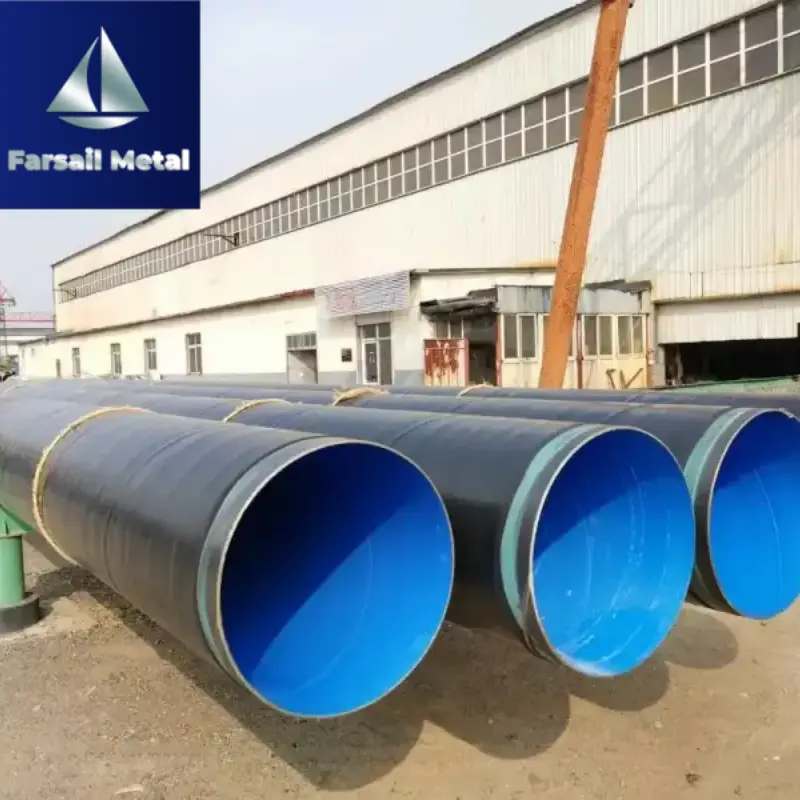
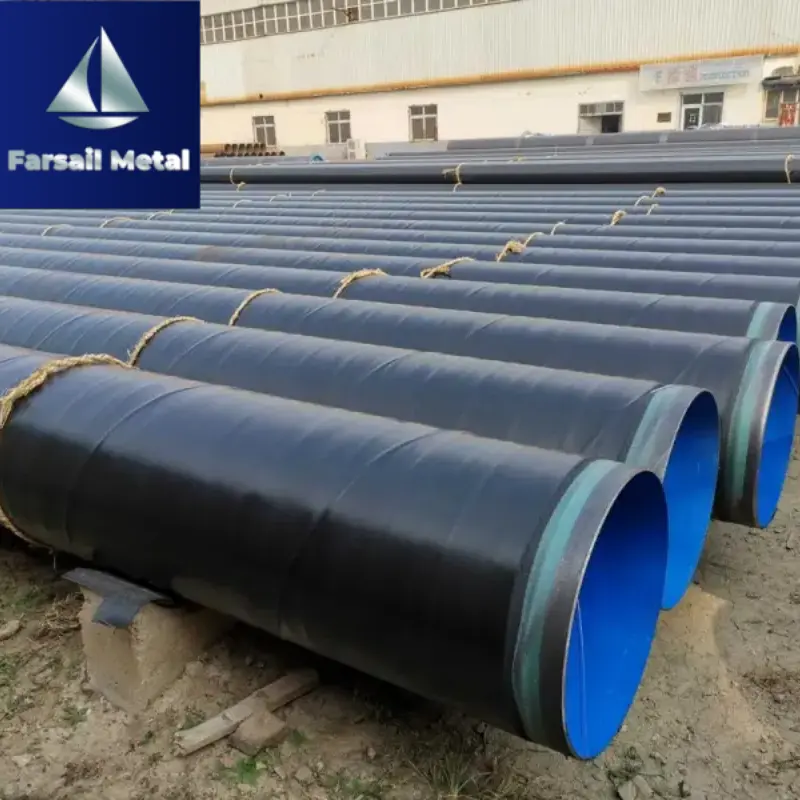
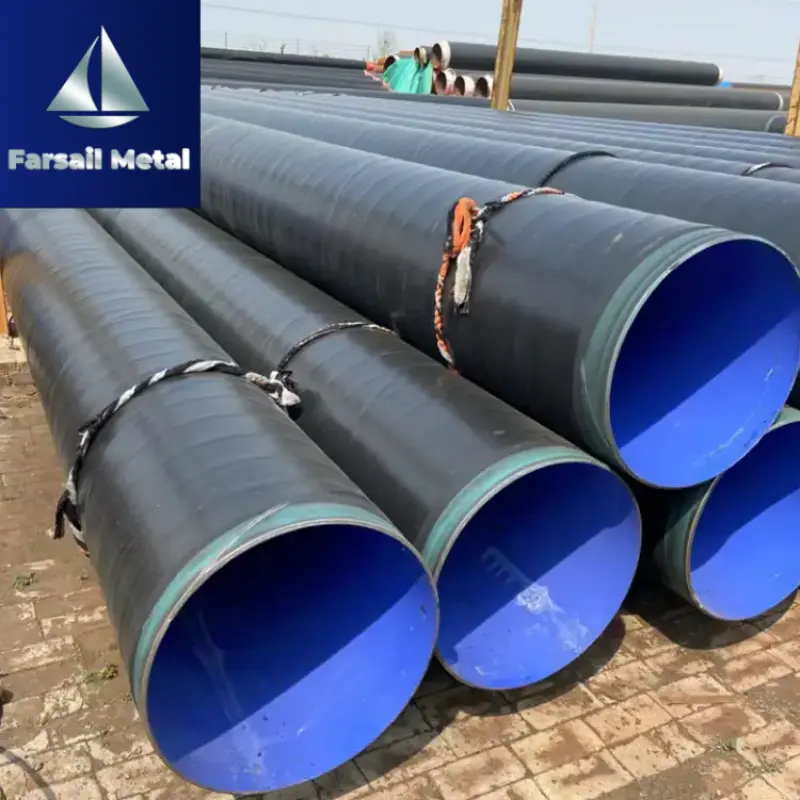
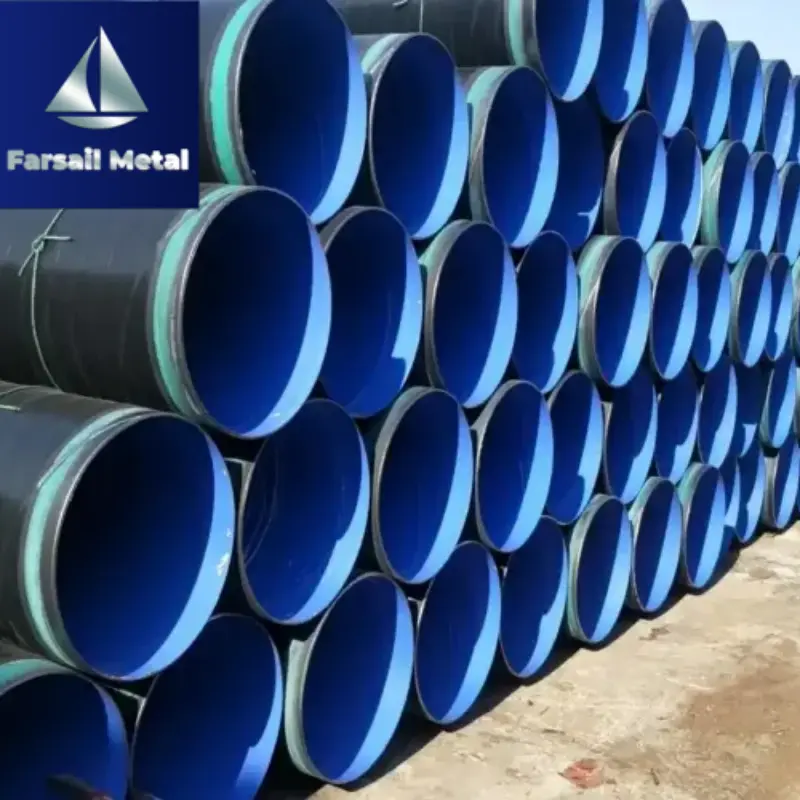
3LPE Externally & FBE Internally Coated Steel Pipe is a special steel pipe with a double-layer anti-corrosion structure of “external 3-layer polyethylene (3LPE) + internal fusion-bonded epoxy (FBE)”. It is mainly used for transporting fluids such as oil, natural gas, chemical media, and drinking water, especially suitable for harsh working conditions where the soil is highly corrosive and the transported medium is erosive to the inner wall of the pipeline . Its core design concept is to resist corrosion from external environments such as soil and groundwater through the outer 3LPE coating, while protecting the inner wall of the pipeline from scouring and chemical corrosion by the transported medium through the inner FBE coating, thereby significantly extending the service life of the steel pipe and reducing pipeline maintenance costs.
External Anti-corrosion:The outer 3LPE coating consists of a bottom epoxy powder (FBE) layer, a middle adhesive layer, and an outer polyethylene layer. It can effectively isolate corrosive substances such as moisture, salts, and microorganisms in the soil, prevent electrochemical corrosion and soil stress corrosion cracking on the outer wall of the steel pipe, and is suitable for complex geological environments such as deserts, wetlands, and saline-alkali lands.
Internal Anti-corrosion:The inner FBE coating is a high-density, high-adhesion epoxy resin coating with excellent chemical stability. It can resist the erosion of sulfides in oil, acidic gases in natural gas, and chemical media. At the same time, it prevents direct contact between the transported medium and the inner wall of the steel pipe to avoid rust, ensuring the purity of the transported fluid.
Mechanical Protection:The outer polyethylene (the outermost layer of 3LPE) has good toughness and impact resistance, which can protect the coating from mechanical damage during pipeline transportation and construction backfilling; the inner FBE coating has high hardness and can resist the scouring and wear of impurities in the fluid.
Improving Fluid Transportation Efficiency:The inner FBE coating has a smooth surface and low friction coefficient (usually ≤0.015), which can reduce the flow resistance of the fluid in the pipeline, lower transportation energy consumption, and at the same time prevent the medium from scaling on the pipe wall, reducing the risk of pipeline blockage.
ISO 21809-1,ISO 21809-2;
ASTM A53,ASTM A106,API 5L,CSA Z245.20;
EN 10255,EN 10240,EN ISO 21809-1,EN ISO 21809-2;
GB/T 3091,GB/T 13793,GB/T 9711,GB/T 8163,GB/T 23257,GB/T 39636.
Base Material:
ASTM A53: Grade A、B,ASTM A106: Grade A、B、C;
EN 10255: S195T、S235JRH、S275JRH、S355JRH;
GB/T 3091: Q215A/B、Q235A/B、Q355B, GB/T 8163:10#,20#,Q355,Q420,
GB/T 13793: Q195、Q215A/B、Q235A/B、Q355B、Q390B;
Anti-corrosion Coating:
1.External Coating:Three-Layer Polyethylene(3LPE)-
Consists of Bottom Layer:Fusion-bonded epoxy powder(FBE);Middle Layer:Adhesive;Surface Layer:High-density polyethylene(HDPE).
2.Internal Coating:Fusion-Bonded Epoxy Powder (FBE).
Thickness:
External Coating Total thickness: ordinary grade ≥2.0mm, enhanced grade ≥2.5mm,
Internal Coating thickness: ≥300μm.
Key Performance :
Strong Adhesion – Excellent bonding between the coating and steel pipe, with no interlayer peeling to ensure structural integrity.
High Impact Resistance – Good toughness even at low temperatures, capable of withstanding mechanical impacts during transportation and construction.
High Coating Integrity – Dense and uniform coating structure, free of pinholes or leaks to block the penetration of corrosive media.
Strong Chemical Resistance – Resistant to erosion from acids, alkalis, and salts, suitable for long-term service in buried or submerged harsh environments.
Relatively High Temperature Resistance – Stable performance under temperature fluctuations, no cracking or peeling in both low-temperature and high-temperature conditions.
Steel Pipe Base Material Pretreatment:
Steel Pipe Inspection: Conduct dimension inspection (diameter, wall thickness), mechanical property testing (tensile, bending test) and non-destructive testing (ultrasonic testing, magnetic particle testing) on the incoming steel pipes, and reject unqualified base materials.
Surface Derusting: Use shot blasting derusting process to completely remove the scale, rust and oil on the inner and outer walls of the steel pipe, so that the surface roughness reaches Ra 40-80μm ( Sa 2.5 standard) to enhance coating adhesion.
Internal Coating (FBE) Application:
Preheating: Heat the steel pipe to 230-250℃ (FBE powder curing temperature) through medium-frequency induction heating equipment to ensure that the powder can be cured quickly after coating.
FBE Powder Coating: Use the “electrostatic spraying” process to uniformly spray FBE powder on the inner wall of the steel pipe. The powder melts and levels when heated to form a continuous and smooth coating.
Curing & Cooling: The coated steel pipe enters a curing oven (maintain 230-250℃, curing time 10-15 minutes) to fully cure the FBE coating; then the temperature of the steel pipe is cooled to below 60℃ by water cooling or air cooling to avoid coating deformation.
External Coating (3LPE) Application:
Secondary Preheating: Reheat the steel pipe with internal coating to 210-230℃ to prepare for the coating and bonding of each layer of the external coating.
Epoxy Powder Bottom Layer Coating: Spray epoxy powder on the outer wall of the steel pipe by electrostatic spraying. The powder is cured by heat to form a bottom layer with thickness ≥100μm.
Adhesive Middle Layer Coating: When the epoxy bottom layer is not fully cooled (temperature 180-200℃), the adhesive is uniformly extruded and coated on the epoxy bottom layer by an extruder, with a thickness ≥170μm to realize the bonding between the bottom layer and the surface layer.
Polyethylene Surface Layer Coating: Immediately after the adhesive coating, high-density polyethylene (HDPE) is extruded and coated on the adhesive layer through a special extrusion die, with a thickness ≥2.0mm, forming the overall structure of the 3LPE external coating.
Cooling & Shaping: Use spray water cooling to quickly cool the steel pipe coated with 3LPE to room temperature, so that the external coating is shaped and dimensional stability is ensured.
Inspection: Conduct appearance inspection (no bubbles or scratches on the coating), thickness detection (coating thickness gauge), adhesion test, spark leak detection (detect coating pinholes) and impact resistance test on the finished steel pipes. Only qualified products can be put into storage.
Packaging: Use pipe end protection caps to protect the pipe orifices, wrap the outer wall of the steel pipe with waterproof film, and bundle it with steel strips for transportation and storage, preventing coating damage during transportation.